Talendary: AI Recruitment UX

Increase engagement in the app by making more users view and review candidates on the platform.
Objective
The number of candidates viewed on the platform went up by over 100%.
Result
Lead UX Designer in an interdisciplinary team, collaborating with stakeholders and developers.
My role
Scope
April - June 2025

Who is Talendary?
Talendary is an AI startup focused on transforming recruitment. Its SaaS platform helps recruiters source and evaluate candidates more effectively. To fit seamlessly into existing workflows, Talendary also offers a Chrome extension for LinkedIn and integrations with applicant tracking systems. By combining these features, Talendary enables recruiters to identify stronger candidates faster, reduce bias in hiring, and work more efficiently overall.
Anna is used to work in LinkedIn and prefers to confirm candidate CV with LinkedIn profile. Hence Anna dosent spend alot of time in the app.
The Problem
Anna, is a recruiter that uses Talendarys AI in her current workflow. As part of her work she reviews incomming applications for jobs and search candidates on her own. Thanks to Talendarys AI she can get a quick score of each candidate to know if they are an okay fit for the position.
Almost all our users view profiles in LinkedIn instead of in the app
The Design forces recruiters to jump between linkedIn and Talendary
The Design forces recruiters to jump between linkedIn and Talendary
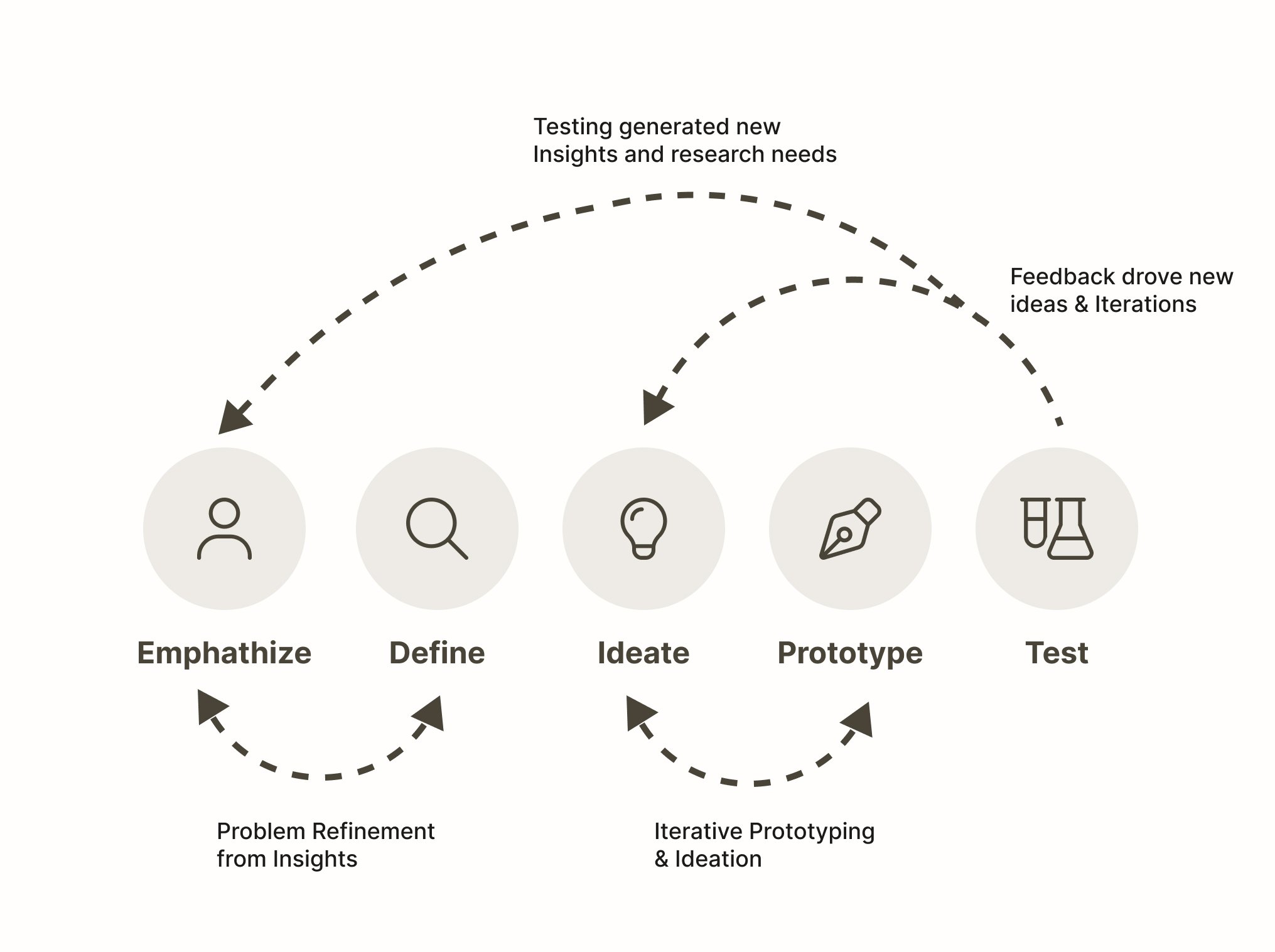
By utilizing an iterative design process relying on user feedback, we were able to increase the number of in-app candidate views by over 100%
Overview of the Design Process
02/Research & Soultuion
Starting with What You Have
I began by reviewing recently created personas and customer feedback documentation. This gave me a quick problem overview, exposed gaps in our understanding, and helped refine the target users and identify what questions to ask.
Talk to the Users
With my existing foundation, I reached out to recruiters, scheduled interviews, and asked questions targeted at the gaps. This way, every conversation added fresh and relevant insights.
What Did I Learn from the Users?
Recruiters view hundreds of candidates every day and need to be able to quickly identify the most relevant information.
Having information that backs up the AI scores makes their work easier.
Limitations in LinkedIn force recruiters to actively search for information elsewhere from time to time.
*High-level overview only; details omitted for confidentiality.
Working on the Solution
One of the most effective ways, in my opinion, to find solutions to users’ problems is to brainstorm while shifting focus. Starting with ideas from existing solutions and standards, and then shifting to creative, out-of-the-box solutions. Often I find that the true solution is somewhere in the middle.
In this case, I moved between prototyping and ideation, moving back and forth between the two and iterating. I also decided to loop in the development team and leadership from time to time to make sure the most impactful and effective solution was decided.
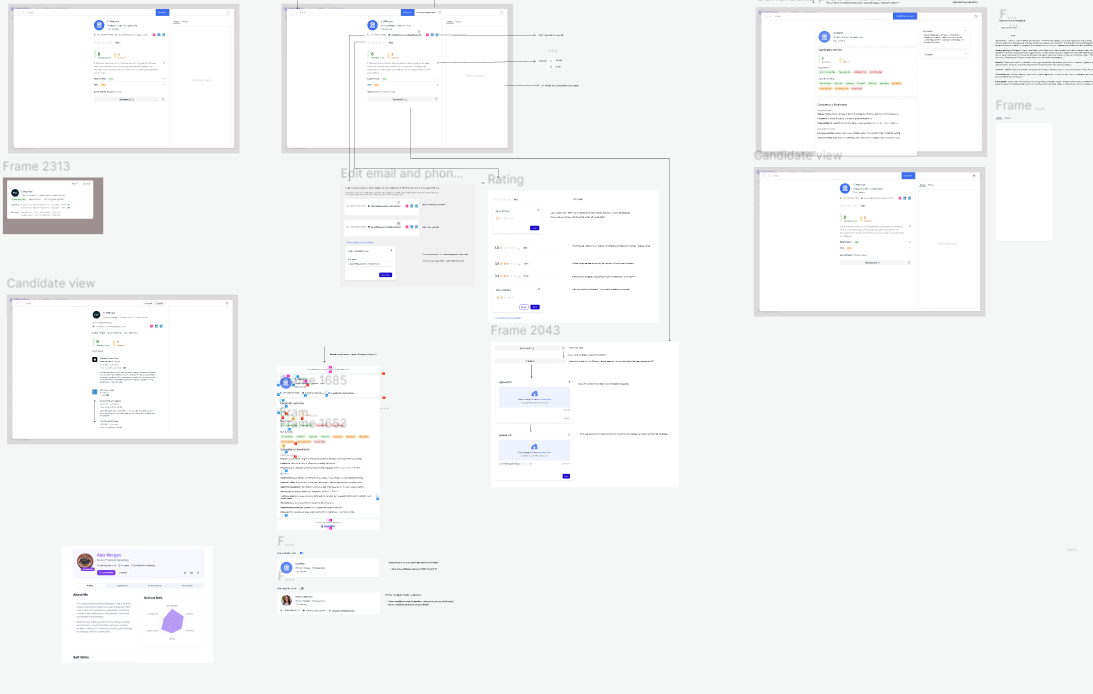
Fail Quick and Early
After the first prototypes, I brought in second opinions to try and evaluate the idea, including input from users. This provided quick feedback and ensured that we could validate and improve on the solution without expending too many resources.
03/Implementation and Aftermath
Implementation and Aftermath
After rolling out the new design in production, we noticed a clear increase in the number of candidates viewed on the platform, meaning that the design was successful. But no design is ever truly finished, and each discovery brings new questions.
Currently, we are working on further improving the efficiency of how recruiters view candidates and exploring new innovative collaboration opportunities that will give the platform an advantage over other tools..
Key Takeaways
This project taught me the importance of balancing user needs with business goals. Not every user request has the same impact, some drive real change, while others are more “nice to have.” I learned to evaluate which needs truly move the needle, and how to navigate trade-offs so that both recruiters and the business benefit in the long run.
More Projects

Understanding students mental models to identify opportunities for better information retrieval in ChatGPT.
UX Research
Creating a user-centered solution to simplify household chores through extensive user research and participatory design methods.